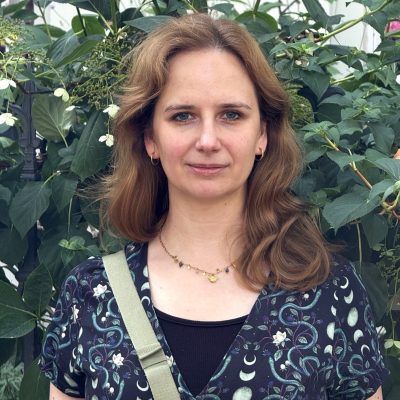
Dr Elizaveta Berezina
Elizaveta Berezina is a cultural historian whose work examines how artistic and craft practices are produced, classified, and valued across different institutional and political contexts. She completed her PhD in comparative history at Central European University in Vienna in 2025 with a dissertation on Soviet folk art industries, the institutions that supervised craft production, and the materiality of craft. From 2022 to 2025, she was a research associate at Leipzig University’s Institute of Art History, where she worked on a project reassessing naïve and self-taught art. She also contributed to the development of new theoretical and methodological approaches to the field, particularly through exhibition history. Her research interests include marginalized and non-canonical forms of artistic production, with particular attention to the cultural infrastructures that determine their (in)visibility and interpretation.
During her fellowship at KWI, Elizaveta will develop a publication project based on her doctoral dissertation. The project expands her research on Soviet craft institutions into a comparative study of the institutions that oversaw, advised, and organized craft production in selected state-socialist countries of Central and Eastern Europe after 1945. It traces the circulation of organizational models, expert knowledge, and craft-related policies across the socialist bloc and examines how craft became a field in which questions of authorship, creative labour, tradition, and artistic value were negotiated. Among the questions addressed by the project is the contested concept of collective creativity: how critics, administrators, and cultural institutions opposed individual authorship to ideas of collective labour, tradition, and cooperative authorship, and how these ideas shaped the production and circulation of crafts.
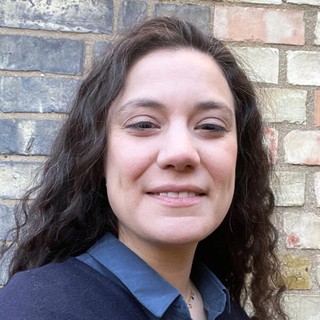
Dr Yasmina El Chami
Yasmina El Chami is an architect and assistant professor in architectural humanities at the University of Sheffield. She holds a BArch from the American University of Beirut, an MPhil from the Architectural Association, and a PhD from the University of Cambridge. Her work explores the architecture of informal imperial actors in the nineteenth and twentieth-century Eastern Mediterranean. El Chami’s research has been supported by the Paul Mellon Centre for Studies in British Art; the Graham Foundation; the Institute of Historical Research, London; and the Cambridge Trust, among others. Her first monograph, Collective Colonialism: Architecture and Missionary Competition in Ottoman Lebanon, is due to be published by the University of Minnesota Press in 2027.
During her fellowship at KWI, Yasmina will be developing her new book project, “Building an American ‘Near East’,” which examines the role of American education in the shaping of scientific cultures in the post-Ottoman Eastern Mediterranean. The book focuses on the campus-building activities of the Near East College Association (NECA, est. 1919) and traces the development of an American geopolitical project operating through six interlinked colleges in post-WWI Lebanon, Turkey, Bulgaria, and Greece. It offers new insights into the overlooked influence of the United States in the post-WWI Mediterranean and highlights the crucial and multifaceted role of architecture in consolidating complex political, economic, and cultural interests at an urban and regional scale.
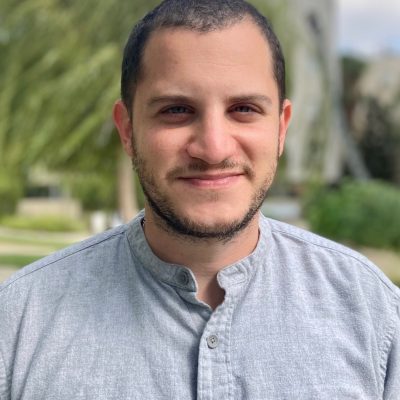
Dr Gai Farchi
Gai Farchi’s current research examines the intersection of witnessing discourse and generative AI aesthetics. It focuses on AI-generated slop—the accelerated production of disposable yet visually plausible images, texts, and sounds—as a symptom of the post-witness condition, marking a shift from the logic of the trace to a logic of generic, statistical sampling. By attending to AI’s playful attempts to pass as historical through the repetition of familiar visual cues, the project investigates the normative conditions through which authenticity and witnessing become recognizable in emerging visual culture.
At KWI, Gai aims to develop this strand of research as part of a forthcoming monograph exploring the coexistence of generic aesthetics and hyper-personalization in postindustrial and platform capitalism.
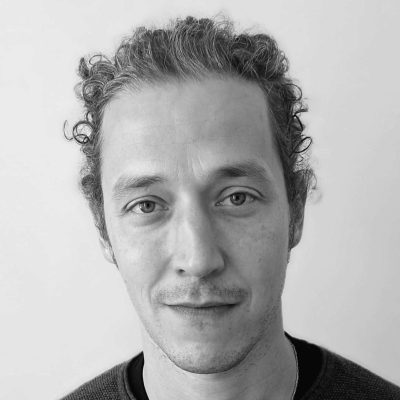
Dr Martin Herrnstadt
Martin Herrnstadt is a historian of science and knowledge with a focus on the history of the humanities and social sciences from the seventeenth to the twentieth century. His work contributes to a historical-political epistemology of the human sciences that does not treat power as external to knowledge production. Within this political history of science, he examines the enquête as an interventionoriented form of knowledge employed by state administrations, private actors, and social movements alike.
At KWI, he will further develop his current book project on the history of the monographic method as a transnational tradition of applied environmental and social knowledge that emerged in the mining sciences of the 1830s and 1840s. The project proposes an alternative genealogy of the social and human sciences beyond the reference to a fixed divide between nature and culture. In addition, he is preparing a research proposal that will situate the monographic format within a broader historical framework and integrate its colonial and postcolonial dimensions.
Beyond his engagement at KWI, Martin Herrnstadt co-coordinates the international DFG research network “Global Cultures of Enquête: Towards a Praxeology of Surveying, 17th– 21st Centuries,” (enquete-cultures.org) an interdisciplinary forum that brings together historians, sociologists, anthropologists, and scholars from STS to discuss the political history and contemporary practices of empirical procedures across different regions and periods.

Dr Anna Nasser
Anna Nasser is a historian of modern France and the European empires. Specialised in women’s history and imperial history, she holds a PhD in Global History and Governance from the Scuola Superiore Meridionale – University of Naples Federico II. Her PhD focused on the role of women’s organizations in the process of decolonization in the French Empire, particularly in France and French West Africa, and on how they framed transnational, imperial and anti-colonial networks, and promoted social rights for women. For the academic year 2025-2026, she has been the Deakin Fellow at the Maison Française d’Oxford and at the European Studies Centre of St. Antony’s College at the University of Oxford. From 2026 she is an affiliate member of the Faculty of History of the University of Oxford (2026-2028), and a member of the editorial board of Genesis, the journal of the Association of Italian Historians of Women’s and Gender History. Her research interests cover the history of European empires and their colonies in Africa, the history of feminist and women’s internationalisms, the history of social rights.
Her research at KWI aims to investigate the intersection of decolonization processes across three major European empires—France, the United Kingdom, and Belgium —by focusing on how their late imperial policies and reforms influenced specific rights in the metropolitan space between 1945 and 1960. Framed as a comparative and connected history, it questions how the expansion of imperial gendered welfarist and social policies has affected metropolitan understandings of and policies on women’s education, family allowances, and healthcare; the project further analyzes the establishment of modern welfare state systems in Europe, as well as the interconnectedness across imperial experiences, by focusing on women’s groups active in the colonial and metropolitan spaces. In doing so, the project proposes a social and gendered history of decolonization in Europe. It suggests that decolonization in the metropolises can be better understood when conceived as a coproductive process and when focusing on imperial porous borders and the constant exchanges with other imperial spaces.
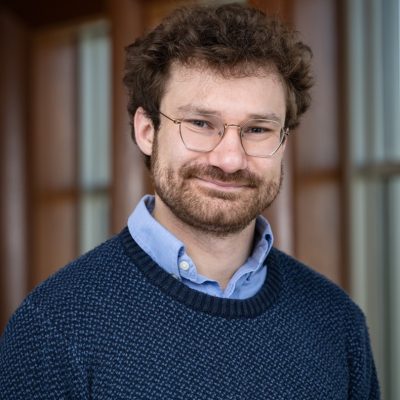
Dr Aaron Neiman
Aaron Neiman is a medical anthropologist studying the ways we seek, talk about, and conceive of therapy. His book project at KWI, “Psychic Retreats: The New Politics of Mental Health in the Global North”, explores the rise of computer-automated therapy programs and the changes they have brought to popular and scientific understandings of mental health. Bringing together science and technology studies, social and economic history, medical humanities, and multi-sited ethnography with the users and developers of these programs, it asks how human-to-human care is being reconfigured in the age of AI.
With a particular focus on critical studies of AI and the Global North, it asks how new computational technologies both afford new opportunities for healing while enabling those in wealthy societies to psychically “retreat” further inwards amid global polycrisis.
The project borrows from a wide range of theoretical traditions, including psychoanalysis, Marxist and anti-imperialist political economy, and philosophical explorations of human/machine relations. Source materials and data include original ethnographic fieldwork in Australia and Europe with digital mental health developers, in-depth interviews with users, and discursive analyses of popular media and scientific publications. Guiding this wide-ranging exploration of a new medical and communication paradigm is the overriding question: what, if anything, is truly unique about giving and receiving psychotherapy?
Dr Jungmo Youn
Jungmo Youn is a historian of media and culture whose research examines the formative process of capitalistic rationality in East Asia, with particular attention to the cultural formation of the middle class in Korea, China, and Japan. Situated at the intersection of cultural history, media studies, and historical materialism, his work investigates how popular narratives, media technologies, and cultural industries are mediated in response to shifting global regimes of capital accumulation. More broadly, he explores how immediate forms of experience and mentality are represented and materialized as thoughtimages and epistemic structure that shape contemporary social formations and cultural imaginaries. He received his PhD in communications from the Institute of Communications Research at the University of Illinois, Urbana-Champaign.
At KWI, Jungmo is preparing a second book project, Neither Julien Sorel Nor Billy Elliot, based on a longitudinal ethnographic study of the academic experiences of Chinese university students, following their trajectories from undergraduate studies in China to the completion of MA degrees in the UK and Hong Kong. Drawing on 5-year participant observation and in-depth interviews conducted while working as a lecturer at two universities in China and the UK, this project traces the transformative dynamics of anxiety and desire that emerge from the cultural antinomies between internalized political censorship and the pursuit of higher education as a pathway to individual and intergenerational class mobility.
This research contributes to an interdisciplinary understanding of the reshaping cultural matrix of East Asian capitalistic socialization within global cultural production. It illuminates the cultural interface where local modes of conversions of monetary capital into social/symbolic capital are articulated with the global higher education system, increasingly operating as a cultural industry sector serving as axes for the global mobility and reproduction of unproductive labor power. Focusing on the second generation of China’s post-Deng economic reform, this study also offers comparative insights into homologies with Korean contexts in the 1990s. Furthermore, it opens a space for theoretical conversation between the ethnographic approach of early British cultural studies, often selectively appropriated and mechanically applied in a positivist manner, and the Frankfurt School’s concepts such as cultural industry, quantification of quality, and the formalization of reason, which have frequently been decontextualized from their German philosophical lineage and accepted as ”halfknowledge (Halbwissen)”.